Archive for the ‘Passenger Charter’ Category

Falcon 2000LX London City approval …

Friday, July 23rd, 2010

Dassault is expecting imminent approval for London City airport operations by its Falcon 2000LX – which will make the entire Falcon range available for Private Jet Charter flights to and from the east London airfield popular with City bankers and business people.

The secret is an autobraking function, certificated in June, that kicks in as soon as the main landing gear touches the runway, to cut landing distances by as much as 45m (150ft) on normal approaches or 90m on steep approaches

Dassault chief test pilot Philippe Deleume commented: “The system is transparent to the pilot. It is like landing with the brake pedals pushed forward.” The 2000LX is already certificated by the European Aviation Safety Agency for steep approach, and the flagship Falcon 7X was approved for London City air charter operations last year.

The airport is located amid London’s East End skyscrapers, and the runway is just 1,319m at landing and 1,199m at take-off. Noise restrictions are also strict.

Lockhead Martin puts forward a private jet design to NASA

Friday, July 9th, 2010

A new supersonic private jet has been submitted to NASA by Lockheed Martin for future development.
The Supersonic Green Machine is designed with an inverted-V underwing engine to reduce the effects of sonic boom. This helps the aircraft fly faster and farther, while making it more environment-friendly.
If NASA’s Aeronautics Research Mission Directorate develops the project, it will available in the commercial market by 2035.

Embraer to display executive jets at the CBAA in Calgary, Canada

Monday, July 5th, 2010

Embraer will be participating  for the fifth time in the Canadian Business Aviation Association (CBAA) Annual Convention. This Trade Show and Static Display is held in Calgary, Canada, on the 7th & 8th July, at Landmark Aviation in Calgary International Airport (YYC).

The company will be showing its entry level Phenom 100 executive jet, which made its debut at the show in 2009. In the afternoon of  day two, 8th July, at the indoor static display area, Embraer will be hosting a press briefing with an overview of the company’s executive jets portfolio.

“We are pleased to return to the CBAA Convention this year, because it provides us with a great venue to connect with our customers,” said Ernest Edwards, Embraer Vice President, Marketing and Sales – USA, Canada, Mexico, and the Caribbean, Executive Jets. “Canada has continued to be a good market for us, and with over 140 Phenom 100 aircraft currently in service around the world, we are excited to bring the executive jet back to the show.” 

The Canadian Business Aviation Association (www.cbaa-acaa.ca) is a non-profit organization incorporated in 1962 as Canada’s voice for business aviation. Over the course of its existence, the CBAA has assumed an increasing leadership role in its advocacy and regulatory stewardship role for Canadian business aviation interests. The Association currently boasts over 500 member companies, and represents them before government and non-government agencies.

CAA opposes upgrading wetlands near airport

Monday, June 28th, 2010

The Civil Aeronautics Administration (CAA) recently expressed strong opposition to a plan to further conserve and upgrade a wetland located near the Taiwan Taoyuan International Airport, fearing it will endanger aviation safety.
CAA officials said the Hsutsuo Port Wetland in Taoyuan County’s Dayuan township is only 1.5 kilometers away from the airport, Taiwan’s main international gateway, making a potential source of danger.
Once the wetland is upgraded, the officials feared, more birds will nest there and the growing bird population will consequently create a greater threat to flight safety.
After Taoyuan Airport’s third terminal is built, its new runway area will be only about 1 kilometer away from the wetland, CAA officials said.
“Greater numbers of wild birds visiting or staying in the wetland will potentially pose greater hazards to aircraft taking off or landing,” CAA officials contended.

Single-pilot airliners….

Friday, June 18th, 2010

Embraer is preparing for the possible introduction of airliners designed for single-pilot operation by as early as 2020, following the roll-out of next-generation air traffic management systems in Europe and the USA.

Vice-president for airline market intelligence Luiz Sergio Chiessi says the Brazilian manufacturer is looking to provide “single-pilot capability, at least” in the 2020-25 timeframe.He cautions, however, that much work needs to be done to persuade the travelling public, regulatory authorities and unions that the concept is feasible.”It’s very difficult to predict that this is going to happen, but I believe that we will have to provide capability for eventual implementation into the real world,” says Chiessi.Embraer is the first airliner manufacturer to publicly acknowledge it is in the early stages of studying single-pilot airliners.

FAA exempts volcano cancellations from slot usage rule

Friday, June 11th, 2010

The US FAA announced on Thursday that flights cancellations caused by volcanic ash during April will not affect slot assignments at two major US gateways.

The FAA says it “will grant relief from the use-or-lose requirements for all carriers operating scheduled flights at JFK and EWR to or from points in Europe during the period from April 14 through 26, 2010.”

The ruling is in response to a request made by Continental Airlines, which has an international gateway at Newark, in May.

The carrier argued that cancellations should be exempt due to the ash created by the eruption of Iceland’s Eyjafjallajökul volcano in April.

Currently, carriers must utilize slots at least eighty percent of the time, or they will be withdrawn.

The agency believes that allowing slots to go unused 20% of the time accounts for “routine” cancellations. The FAA concluded that ash-related cancellations are “unusual circumstances” that justify a “limited waiver of the minimum slot usage.”

In addition, the FAA ruled that it will “grant similar relief on an individual carrier basis” to airlines that face cancellations due to ash through 30 October.

Carriers must contact the FAA Slot Administration Office to receive a waiver.

Addition of a new Gulfstream IV SP to Teterboro, USA

Monday, June 7th, 2010

A private aviation services company, has recently added a Gulfstream IV SP to their fleet of charter aircraft. The premium large cabin Gulfstream is based in Teterboro, New Jersey (TEB) and is available for charter. 

“We are very pleased with the addition of another Gulfstream IVSP to The Meridian Fleet,” said Mike Moore, Meridian’s Director of Aviation Sales and Aircraft Management. “We are thrilled to offer our clients maximum flexibility in today’s global market with an aircraft of this caliber.” 

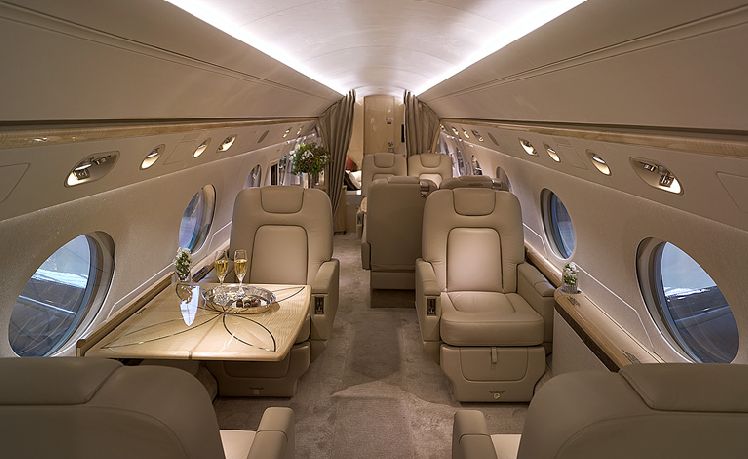
Configured comfortably for 13, the earth-toned interior of the stand-up cabin is enriched with soft, camel colored, plush, leather seats and a soft sable sofa complimented by luminous walls and a cream colored headliner. The exquisite woodwork presents a soft brown, honey golden hue. The aft located private lavatory with sink is also easily accessible and comfortable.

Falcon 2000-Series Reduced Landing Distances

Sunday, June 6th, 2010

Dassault is about to receive certification for a “nose-up autobrake” feature to further cut Falcon 2000-series landing distances, chief test pilot Philippe Deleume told AIN last month. The technique will reduce landing distances by approximately 150 feet, thus helping the 2000DX/EX/LX meet London City Airport requirements.

London Heathrow & Stansted runway decision may benefit industry in the long term

Monday, May 31st, 2010

BACA says UK runway decision may benefit industry in the long run

BACA, the Baltic Air Charter Association, says the decision by BAA to scrap plans for new runways at Heathrow and Stansted is unlikely to harm air charters and may, in fact, benefit the charter industry in the long run. 

The group, which represents air charter brokers and others involved in the commercial aviation industry, says that eventually the lack of runway space is likely to cause congestion and delays for both passengers and freight.

“When that happens, using charter aircraft via the smaller regional airports will become an even more attractive option,” says BACA Chairman, Dick Gilbert. “Of course, this is good for the smaller airports and the local economy as well as for the charter market.”

BACA is the world’s largest and most prestigious network for the air charter market. Its principal objective is to promote integrity and ethical business practices. It offers training and networking opportunities for members and liaises with aviation and government bodies, lobbying on matters of concern and interest to its members. It is recognised by the UK CAA, the Department for Transport and the European Commission for Mobility and Transport.

[charterx.com]

Private Jet vs Air Taxi

Tuesday, August 25th, 2009

If you’re familiar with chartering your own aircraft the answer is possibly “No!” and certainly there is no legal or officially technical difference. But wait… actually there are important differences. The expressions as commonly used denote rather different types of aircraft but more importantly, an appreciation or even awareness of what an “Air Taxi” is leads to the realisation that it is a form of transport sensibly available to many who perhaps hadn’t thought private flight was for them.

So, in order, let’s look at how private jets and air taxis differ, what they’re used for and finally, why you don’t need to be Sir Alan Sugar (Simon Cowell, Bon Jovi or David Beckham) to make good use of an air taxi here in the real world! This is the key to the question; it’s one of practical use as much as technical detail.

Private Aircraft, Air Taxi or Jet — the science bit.

First off, we’re about chartering here, by definition the commercial hire of an aircraft and crew not running to any schedule – any schedule but yours that is. The term “jet” in this context actually refers to the means of propulsion. Jet engines suck air in the front with a compressor, mix it with kerosene, and ignite it; the high speed hot gas propelled form the rear provides thrust in the same way a released balloon shoots across a room. On the way out the gas passes through a turbine which in turn drives the compressor at the front and hence it is effectively self sustaining all the time fuel is around. The main thing is, there is no propeller. Aircraft so powered are, in simple terms “jets”, private, chartered or otherwise.

By contrast there are also many propeller powered aircraft, falling into two categories; piston engine powered or “turbo-props”. Piston engines in aircraft are in principle the same as a car engine. Turbo-props are actually a development of the jet engine; the turbine of the jet engine described above is connected to the compressor by a shaft and this shaft continues to a gearbox which in turn drives a propeller. (The aircraft carrier HMS Ark Royal was actually a turbo-prop of sorts, Olympus gas turbine engines as powered Concorde were connected to shafts and gearboxes driving propellers … but we digress!). Although not a hard and fast rule private aircraft powered by plain old jets are just that, private jets, and those with propellers are commonly referred to as “air taxis”.

Jets and propeller aircraft come as large and small aircraft; the differences are mainly those of speed, range and altitude. Jets are fast, they fly high (in fact the higher the better for efficiency) and they have typically longer ranges that propeller driven aircraft. The air taxis by contrast come into their own on shorter trips where flat out speed, range and altitude are not necessary. Remember, a Ford Focus will get you to the corner shop pretty much as quickly as a Ferrari, door to door, and a lot more cheaply; you need a long autobahn to get the benefit of a sports car.

Private Jet and Air Taxi uses

Let’s continue with the Ford Focus and the Ferrari, it’s really very similar. Long distance, short of time, need a little full on luxury …  go with a jet! You’ll fly high, fast and in some cases flash (ahem Simon Cowell). However, if you need to get from A to B safely, comfortably and over a relatively short distance (for aircraft this is 500-800km) then an air taxi is just the ticket. A spade is a spade and there is no point pretending that an air taxi is a private luxury jet because it’s not – there is usually no cabin attendant and meals, though provided and far tastier than airline fare is nevertheless self service. But don’t be put off…..

Who uses air taxis and why

Very normal people and companies use air taxis and for a good reason, they get the job done affordably and safely. Prices can start from under a thousand pounds but for that you get every seat on the aircraft. Compare that to a handful of schedule tickets on anything but the likes of … well, I shan’t say the name! Families use air taxis for special occasions, small companies use air taxis to eliminate overnight accommodation on business trips and actually save money overall (add in the reduced “out of office” time). Individuals use air taxis for just about anything.

In conclusion, the difference between a private jet and an air taxi is not a hard and fast one (the new concept of “Very Light Jets” has blurred the boundaries even more!) but an appreciation that private flight is not restricted to the rich and famous but offers the option of an air taxi also  is one well worth having. The beauty is that it costs nothing to find out how having the choice might benefit you. Any reputable charter company will provide a quote in a few hours or less for a flight specifically tailored to you.